Slot RTP means “return to player.” It is usually shown as a percentage that estimates how much a game would return over a very large sample of play under its stated configuration. For example, an RTP display of 96% describes a theoretical long-run return of ₱96 per ₱100 wagered across that sample, with the remaining percentage representing the game’s theoretical house advantage. It does not mean the next ₱100 will return ₱96.
Search terms such as “high RTP slots Philippines” need context. Provider names like PG Soft, JILI and Pragmatic Play may appear beside an RTP figure, but the number belongs to a specific game configuration. Check the title, version, volatility and current information panel before treating it as useful evidence.

| Number or label | Useful question | Common mistake |
|---|---|---|
| RTP | Which game version and setting does it describe? | Treating 96% as the next-session result |
| Volatility | How uneven can the results feel? | Calling low volatility risk-free |
| Hit frequency | How often can a winning combination occur? | Confusing a hit with net profit |
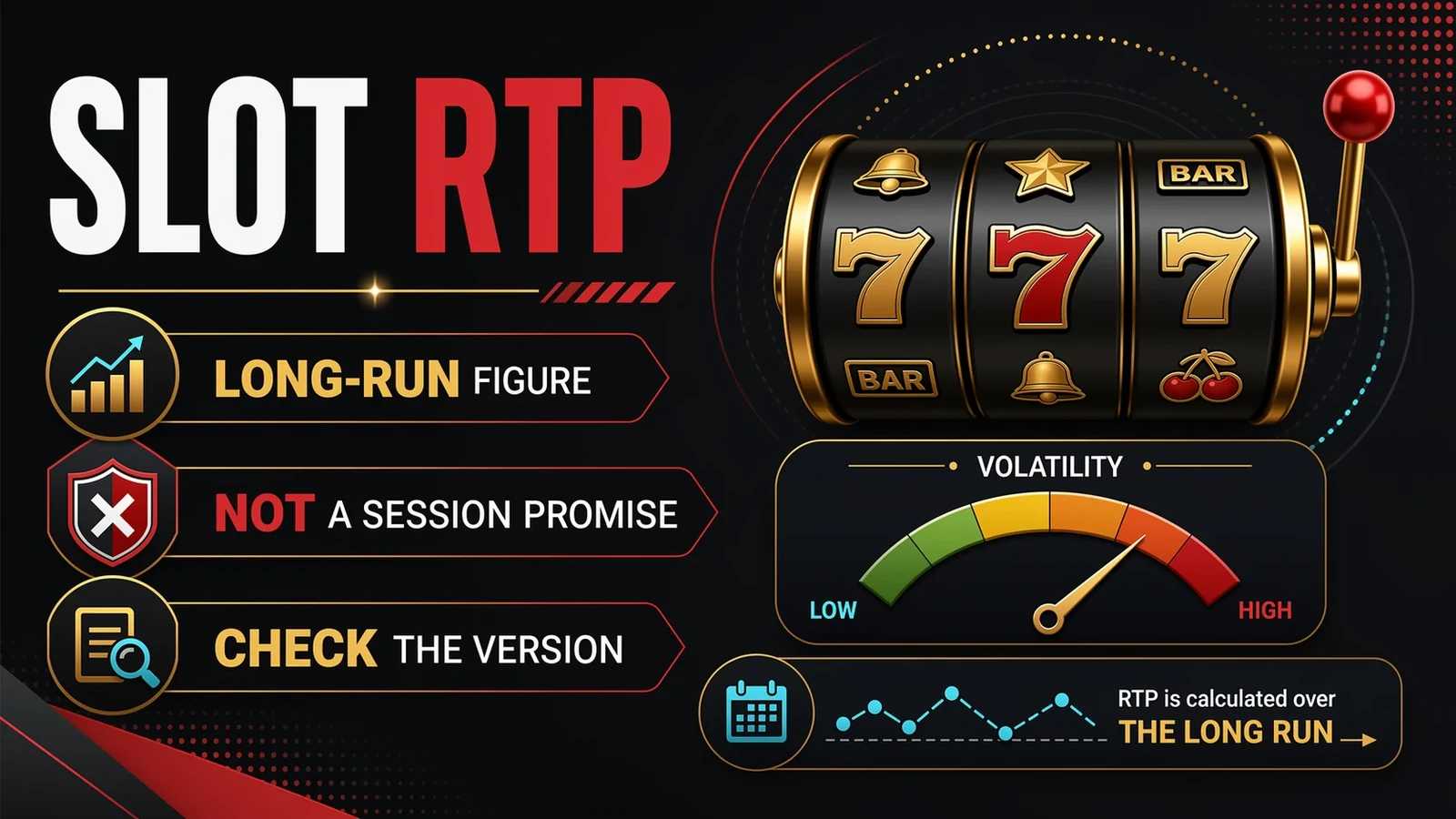
Why RTP is easy to misunderstand
RTP is an average, not a schedule. Random results can be very different over a short session. A game with a high displayed RTP can still produce a losing result, while a lower-RTP game can produce a short-term win. Neither outcome changes the long-run statistic.
RTP also does not tell you how often wins happen or how large the swings may be. That is where volatility, hit frequency and bonus-feature design matter. Kaya “high RTP” alone is not enough information for a sensible comparison.
RTP, volatility and hit frequency
- RTP: the theoretical long-run return shown for a particular game configuration.
- Volatility: an indication of how uneven the results may feel. Higher volatility can mean longer gaps and larger swings; lower volatility does not remove the risk of loss.
- Hit frequency: how often the game records a winning combination under its rules. A hit is not automatically a net profit after the stake is considered.
- Maximum-win wording: a ceiling or promotional feature description, not a normal or expected result.
How to check the RTP of a slot
- Open the game’s information, help or paytable panel.
- Confirm that the RTP belongs to the exact title and version you are viewing.
- Check whether the game has multiple RTP settings, bet modes or bonus purchases.
- Read the volatility and feature explanation instead of comparing one percentage in isolation.
- Keep a screenshot or note of the date if you are comparing information over time. Old screenshots may no longer match the live configuration.
| Before comparing slot pages | Record this | Reason |
|---|---|---|
| Game title and provider | Exact spelling and provider | Avoid mixing different products |
| RTP and date checked | Displayed figure and check date | Old screenshots can drift |
| Budget and stop rule | Maximum spend and time | A statistic cannot set your limit |

What RTP cannot tell you
RTP cannot predict your next spin, identify a “due” game, or make a losing streak more likely to end. Previous results do not create a debt that the random-number system must repay. Avoid systems that tell you to increase your stake after losses; that can make a bad session more expensive very quickly.
RTP also cannot confirm whether an operator is licensed, whether a payment method is available, or whether a bonus can be withdrawn. Those are separate checks. Review the current operator terms, KYC requirements, fees, limits and withdrawal conditions before depositing.
A practical comparison example
Imagine two games both showing a similar RTP. Game A may have smaller, more frequent-looking features, while Game B may have fewer hits and larger possible swings. A player with a small entertainment budget may find Game A easier to manage, but that is a budgeting choice—not proof that it is safer or more profitable. If the stake does not fit your limit, change the stake or skip the session.
For more beginner-friendly slot terms, visit our slot guide for the Philippines, the online-casino information page and the player-check articles. Keep the same rule in mind: compare current information, not a headline that promises a payout.
FAQ
Is 96% RTP good?
It is only a theoretical comparison point. You still need to check the game version, volatility, stake size and applicable rules. “Good” RTP does not equal a guaranteed or fast payout.
Does RTP reset every day?
No. RTP is not a daily balance that resets or becomes “due.” It describes a long-run mathematical expectation for the stated configuration.
Can RTP help me win?
RTP can help you understand the game’s published mathematics, but it cannot predict a win. Use it as one information point, set a hard limit and never treat a slot as an income plan.
Responsible gaming: gambling involves financial risk. Players should be 21 or older in the Philippine regulated-gaming context. See PAGCOR’s responsible-gaming guidance for practical limits and support information.
Ready to check it out?
Sponsored · Terms may change.
Pingback: RTP vs Volatility in Slots: A Simple Guide for Philippine Players - Gamerank88 Philippines Online Casino
Pingback: How to Read a Slot Paytable: Lines, Symbols, and Features - Gamerank88 Philippines Online Casino
Pingback: A Simple Slot Bankroll and Session Plan for Philippine Players - Gamerank88 Philippines Online Casino
Pingback: Demo Mode vs Real-Money Slots: What Changes Before You Switch - Gamerank88 Philippines Online Casino