Online poker is different from a slot or a baccarat round because you make more decisions: which hands to play, how much to bet and when to fold. Skill can influence decisions over time, but each hand still contains uncertainty, and no strategy guarantees a profit. Kung bago ka, the best first step is learning the format and protecting your budget.
Online poker Philippines can mean different products. A cash game, tournament, live table or practice mode may use different buy-ins, fees, time-outs and withdrawal rules. Check the product page and table information first; poker skill does not remove account or money risk.

| Format | What changes | Beginner check |
|---|---|---|
| Cash game | Chips can be bought and left within table rules | Buy-in range and rake |
| Tournament | Entry and payout structure are fixed by the event | Registration and late-entry terms |
| Practice mode | No real-money stake when genuinely free | Confirm it is not a cash table |

Choose a format first
- Cash games: chips represent money and you can normally leave between hands. Check the blind level and table minimum before joining.
- Tournaments: you pay an entry amount and receive tournament chips. The event can end through elimination or a final ranking, and the timing may be longer than expected.
- Texas Hold’em: the most common starting format, using two private cards and five community cards.
- Other variants: Omaha and other formats have different hand-making rules. Do not join a table until you understand the variant.
Before you create or fund an account
- Check the operator’s identity, current terms, age requirement and responsible-gaming information.
- Read the KYC and account-verification steps. Know what documents may be requested before a withdrawal.
- Check deposit and withdrawal methods, fees, limits, processing wording and any restrictions. Do not assume a familiar wallet is supported.
- Read the rake, tournament fee or other table-cost explanation.
- Use a unique password and enable any available account-security controls.
| Account check | Why it matters | Record before funding |
|---|---|---|
| KYC and age rule | Identity checks can affect access | Required documents |
| Payment terms | Methods, fees and limits vary | Current cashier wording |
| Bankroll rule | Prevents a session from expanding | Maximum loss and stop time |
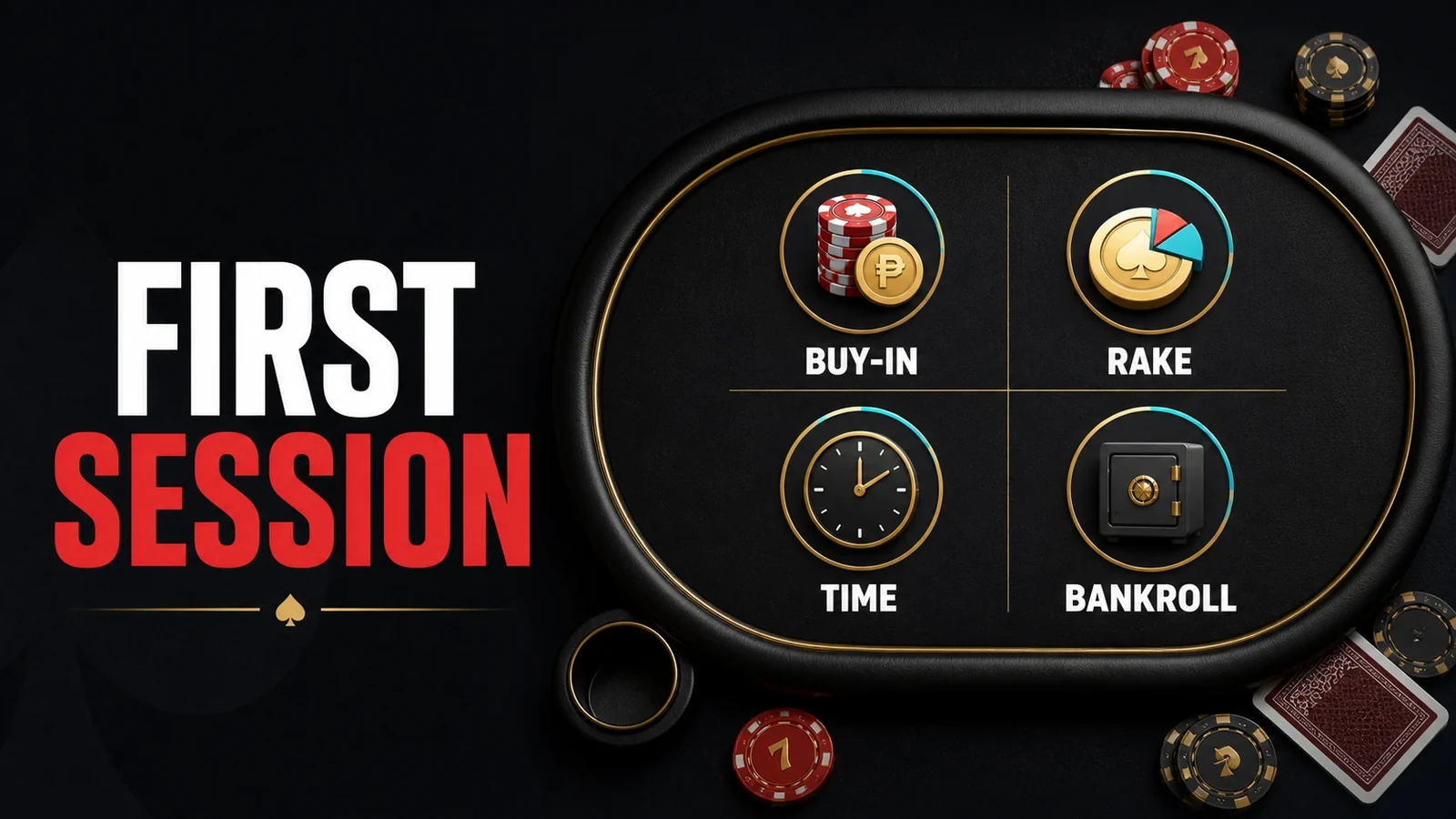
These checks are separate from a game’s rules. A site that explains poker well still needs to show clear account and payment terms. If a term is missing, ask support or do not deposit until it is clear.
Set a beginner bankroll rule
Use a fixed entertainment budget that does not come from rent, food, bills or borrowed money. Decide the maximum you can lose in one session and one week. Keep the stake low enough that a normal losing run will not change your plans for the day.
Do not reload immediately after a loss, and do not move up in stakes because you feel “due” for a win. A simple note in your phone can help: session start, stop time, planned limit and actual result. If the limit is reached, stop—walang habol.
Basic table etiquette
- Know the action order and act when it is your turn.
- Do not reveal folded cards or discuss a live hand in a way that affects other players.
- Take your time, but avoid unnecessary delays.
- Do not share account access or ask another person to play with your account.
- Leave the table if you are angry, tired or trying to recover losses.
A calm first-session checklist
- Choose one format you already understand.
- Read the table limits and costs.
- Set the money and time limit before joining.
- Play fewer tables so you can follow the action.
- Review the session after you stop, without chasing a different result.
Our Philippines poker guide covers related terms, our Texas Hold’em basics explains the hand sequence, and our online-casino information page covers wider account checks.
FAQ
Is poker a guaranteed skill-based way to earn?
No. Skill affects decisions, but results remain uncertain and costs still apply. Never treat poker as a salary or recovery plan.
How much should I deposit?
There is no universal amount. Use only a budget you can lose without affecting essentials, and check the operator’s current minimums and limits first.
What if I am not sure about the payment terms?
Do not fund the account yet. Read the published terms, ask support for a written answer and keep a copy of the current wording.
Responsible gaming: players must be 21 or older in the Philippine regulated-gaming context. See PAGCOR’s responsible-gaming guidance for practical safeguards.
Ready to check it out?
Sponsored · Terms may change.